
Losing a father changes everything. Words often feel too small for a grief this big. Yet the right message can still bring real comfort to someone in pain.
This guide was written to help you find those words when your own feel stuck. It covers messages for every kind of relationship and every kind of loss. You will also learn what to say, what to avoid, and how to make your words feel personal.
Grief is never simple, and no two people mourn the same way. That is why this article goes beyond generic lines and looks at real, thoughtful support. Read through and find the words that feel right for your situation.
The Ethics of Condolence: What to Say and What to Avoid

Comforting someone after they lose a father is not about having perfect words. It is about being present and honest. Small missteps in language can unintentionally hurt, so it helps to know what actually works.
Phrases That Harm: 5 Condolence Clichés to Retire
- “He’s in a better place now” can feel dismissive to someone who just wants their father back.
- “Everything happens for a reason” often minimizes real pain instead of easing it.
- “At least he lived a long life” ignores the fact that grief has no expiration date.
- “I know exactly how you feel” can feel untrue, since every loss is different.
- “Time heals everything” may sound hollow to someone in the rawest days of grief.
The Golden Rule: Validate, Don’t Fix
- “I’m so sorry for your loss, there’s nothing that can make this easier right now.”
- “Your pain makes complete sense, take all the time you need to feel it.”
- “I won’t pretend to understand fully, but I’m here for whatever you need.”
- “It’s okay to not be okay right now, I’m not going anywhere.”
- “There’s no right way to grieve, just do what feels true to you.”
- “You don’t have to be strong in front of me.”
- “I’m holding space for you, however that looks today.”
- “Your feelings are valid, even the messy or confusing ones.”
- “I won’t rush you through this, take all the time your heart needs.”
- “I’m here to listen, not to fix, whenever you’re ready to talk.”
Messages Segmented by Relationship Closeness and Medium
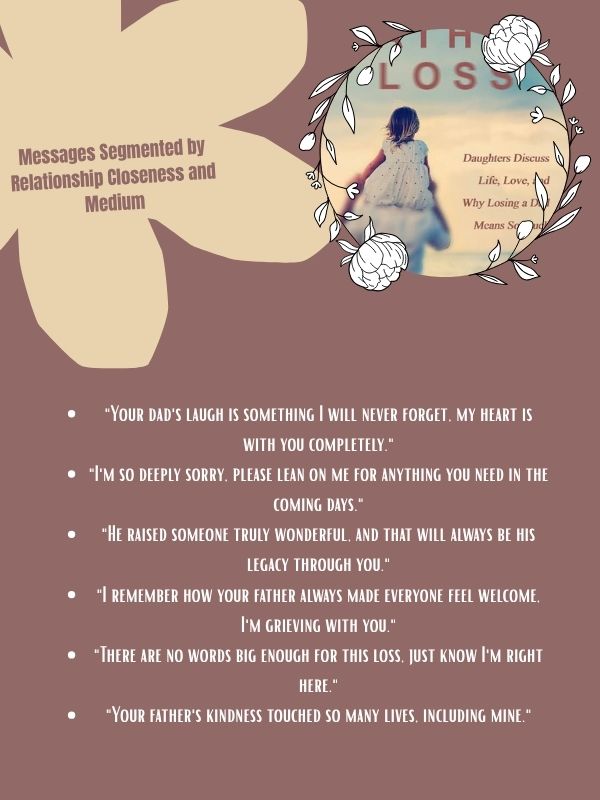
The right words often depend on how close you are to the person grieving. A message for a lifelong best friend should feel different from one to a coworker you rarely speak with.
For Close Friends and Family: Deep Sympathy
- “Your dad’s laugh is something I will never forget, my heart is with you completely.”
- “I’m so deeply sorry, please lean on me for anything you need in the coming days.”
- “He raised someone truly wonderful, and that will always be his legacy through you.”
- “I remember how your father always made everyone feel welcome, I’m grieving with you.”
- “There are no words big enough for this loss, just know I’m right here.”
- “Your father’s kindness touched so many lives, including mine.”
- “I’m thinking of you every single day this week, call me anytime.”
- “Losing him leaves a space nothing else can fill, I’m so sorry.”
- “You and your family are in my heart during this incredibly hard time.”
- “I loved him too, in my own way, and I’ll miss him alongside you.”
For Colleagues or Acquaintances: Respectful Distance
- “I was so sorry to hear about your father, sending my sincere condolences.”
- “Please accept my heartfelt sympathy during this difficult time.”
- “Wishing you strength and peace as you navigate this loss.”
- “My thoughts are with you and your family right now.”
- “I’m truly sorry for your loss, please take whatever time you need.”
- “Sending you comfort and support during this hard chapter.”
- “I hope you feel surrounded by love in the coming days.”
- “Please know your team is thinking of you during this time.”
- “I’m sorry for the pain you must be feeling, take care of yourself.”
- “Wishing your family comfort and peace in the days ahead.”
Short and Immediate: Text Message Condolences
- “So sorry to hear this. Thinking of you tonight. 🕊️”
- “No words, just know I’m here. Call me anytime.”
- “Sending you love right now. Take all the time you need.”
- “I’m so sorry. You’re not alone in this.”
- “Thinking of you and your family today.”
- “Here for you, whatever you need, day or night.”
- “So much love to you right now.”
- “I’m truly sorry. Sending strength your way.”
- “Wish I could hug you right now. Thinking of you.”
- “You and your dad are in my heart tonight.”
The Condolence Navigator: Addressing Complex Grief
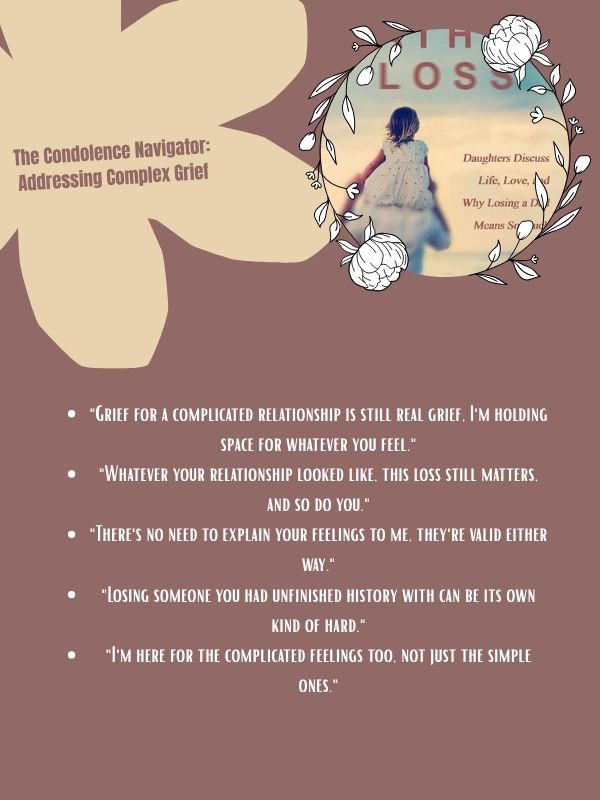
Not every relationship with a father is simple, and not every death happens quietly. These messages are written for the more complicated corners of grief.
Loss of an Estranged or Complicated Father
- “Grief for a complicated relationship is still real grief, I’m holding space for whatever you feel.”
- “Whatever your relationship looked like, this loss still matters, and so do you.”
- “There’s no need to explain your feelings to me, they’re valid either way.”
- “Losing someone you had unfinished history with can be its own kind of hard.”
- “I’m here for the complicated feelings too, not just the simple ones.”
- “You don’t owe anyone a tidy version of your grief.”
- “It’s okay if your feelings are mixed, that doesn’t make them less real.”
- “Take the space you need to process this in your own way.”
- “I’m not here to judge your relationship, only to support you now.”
- “Whatever closure looks like for you, I hope you find some peace.”
Loss Due to Sudden or Tragic Circumstance
- “There are no words for something this sudden, I’m so deeply sorry.”
- “My heart is shattered for you, this is such an unfair loss.”
- “I can’t imagine the shock you’re feeling, please let me help however I can.”
- “This kind of loss is impossible to prepare for, I’m here for you.”
- “Sending you strength for a grief that came without warning.”
- “I’m so sorry this happened so suddenly, my heart is with you.”
- “There’s nothing that makes sense about this, just know I’m nearby.”
- “I wish I could take even a little of this pain away from you.”
- “This is such a painful shock, please don’t go through it alone.”
- “I’m here for the hard days ahead, whenever you need me.”
For the Loss of a Father Figure (Mentor, Stepdad)
- “He may not have been your biological father, but his impact was just as real.”
- “The love he gave you still counts, and so does this grief.”
- “He chose to show up for you, and that kind of love leaves a lasting mark.”
- “Your bond with him mattered deeply, I’m so sorry for this loss.”
- “A father figure’s love is still a father’s love, my condolences to you.”
- “He shaped who you are, and that legacy doesn’t disappear.”
- “I know how much he meant to you, this loss is real and deep.”
- “The role he played in your life deserves to be honored and grieved.”
- “Family isn’t only about blood, and neither is this heartbreak.”
- “He gave you something precious, and I’m sorry that chapter has closed.”
Actionable Empathy: Offering Practical Support
Words help, but action often helps more. Grieving people rarely have the energy to ask for specific things, so offering concrete help removes that burden from them.
Messages That Offer Specific, Time-Bound Help
- “I’m bringing dinner over Thursday night, no need to reply, I’ll just drop it off.”
- “I’ll pick up your kids from school this week, just tell me the days.”
- “I’m free this weekend to help with any calls or paperwork you need done.”
- “I’ll handle grocery shopping for you this week, send me your list.”
- “I’m coming by Sunday to sit with you, you don’t have to talk if you don’t want to.”
- “I’ll take care of your dog while you handle everything else this week.”
- “I’m free Tuesday afternoon if you need help with anything at all.”
- “I’ll drive you to the funeral home whenever you’re ready, just say the word.”
- “I’m setting up a meal train for your family, more details soon.”
- “I’ll answer calls and messages for you today if you need a break.”
Messages Focused on Legacy and Life Lessons
- “The way he lived taught you things that will stay with you forever.”
- “His values live on through the way you treat others every day.”
- “Every lesson he gave you becomes part of how you move through life now.”
- “The stories he told you will keep his voice alive for years to come.”
- “His hard work and heart shaped a legacy that continues through you.”
- “You carry pieces of him in ways you may not even notice yet.”
- “The wisdom he passed down will guide you long after today.”
- “His memory becomes a quiet strength you can return to anytime.”
- “What he built in you will outlast this grief, even if it doesn’t feel that way now.”
- “His legacy isn’t gone, it’s simply living differently now, through you.”
The Power of Personalization: Weaving in a Memory
- “I still remember him teaching me how to grill burgers that one summer, he was so patient.”
- “Your dad’s stories about his childhood always made me laugh, I’ll miss hearing them.”
- “The way he cheered so loud at your graduation is something I still think about.”
- “I remember him fixing my car without ever asking for anything in return.”
- “His advice about starting my first job still guides me today.”
- “The way he welcomed me into your family home meant more than he probably knew.”
- “I still think about the road trip story he told at your birthday party.”
- “His handshake and warm smile at every gathering made people feel instantly at ease.”
- “I remember him showing up early to every single game, rain or shine.”
- “The way he spoke about you, always so proud, is something I’ll never forget.”
Frequently Asked Questions
What is a good short message for the loss of a father?
A simple line like “I’m so sorry for your loss, thinking of you” works well for most situations. Short and sincere messages are often more comforting than long ones.
What should you avoid saying to someone who lost their father?
Avoid phrases that minimize the loss, like “everything happens for a reason” or “he’s in a better place.” These can feel dismissive even when meant kindly.
How do you comfort someone who had a complicated relationship with their father?
Acknowledge that grief can be complicated too, without asking them to explain their feelings. Simply validating their experience is often the most helpful thing you can do.
Is it okay to text condolences instead of calling?
Yes, a short and genuine text is completely appropriate, especially in the first few days. Many grieving people prefer texts since calls can feel overwhelming.
What can you offer besides words when someone loses their father?
Practical help like meals, errands, or childcare often means more than words alone. Offering something specific, rather than a vague “let me know if you need anything,” makes it easier for them to accept help.
Conclusion
Finding the right words after someone loses their father is never easy, but showing up with care always matters. This guide was written to give you options for every relationship and every kind of loss. Whether you choose a short text or a heartfelt letter, sincerity is what truly comforts people.
If any of these messages felt right to you, consider sharing this guide with others who might need it too. Grief can feel isolating, and thoughtful words remind people they are not alone. May your words bring even a small measure of peace to someone who needs it right now.
